Between 2017 and 2025, Virat Kohli's face was the most commercially powerful asset PUMA India possessed. When his 8-year deal ended in April 2025 — with a Rs 300 crore renewal offer left on the table — the natural question was: who replaces the biggest sports star in India? PUMA India's answer was: nobody does. Instead of signing one superstar, they signed six.
In the twelve months following Kohli's exit, PUMA India onboarded Harmanpreet Kaur, Riyan Parag, Nitish Kumar Reddy, Ibrahim Ali Khan Pataudi, Shanaya Kapoor, and Kareena Kapoor Khan — while keeping Anushka Sharma continuing from her 2022 deal. It's a roster built on different logic than the superstar model. It might also be the smarter play for where Indian culture is headed.
Eight Years That Redefined Indian Sportswear Marketing
To understand what PUMA lost — and what it's building — you need the full Kohli era picture. The original 2017 deal was the first Rs 100 crore+ endorsement for an Indian sportsperson. It gave PUMA credibility in the cricket market, category-defining presence in lifestyle sneakers, and a brand identity that younger Indian consumers found aspirational in a way PUMA had never achieved domestically before.
The campaigns produced under that partnership were among the best brand work in Indian sports marketing: the 2019 World Cup #SockThem activation with rapper Divine, the 2022 "Virushka" extension with Anushka Sharma, and the 2024 gully cricket face-off video that accumulated 50 million views in 24 hours — Kohli and PUMA's final collaboration, and one of their strongest. PUMA's official tribute to the partnership framed the exit graciously but also as strategy: "We will continue to invest in the next generation of athletes and aggressively build the future of the sporting ecosystem in India."
The Next-Gen Roster: Riyan Parag, Nitish Kumar Reddy, Harmanpreet Kaur
The February 2026 signings are worth examining individually because they tell a coherent story about who PUMA India thinks is next in Indian cricket.
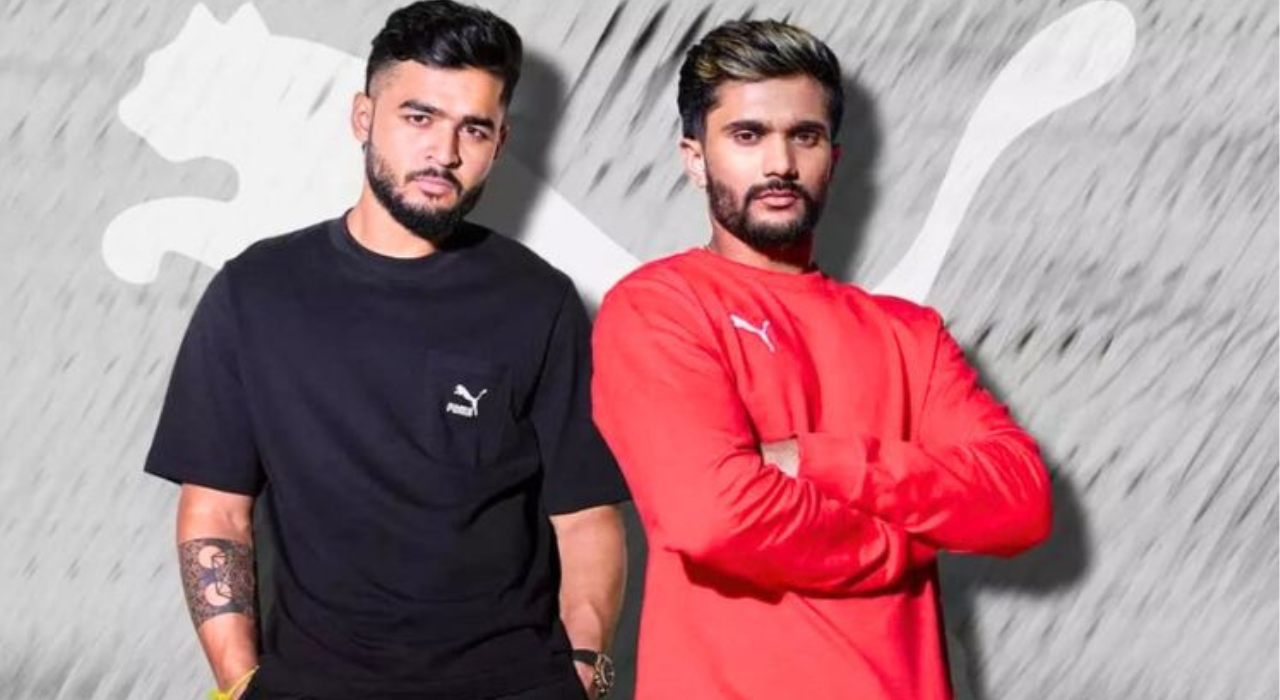
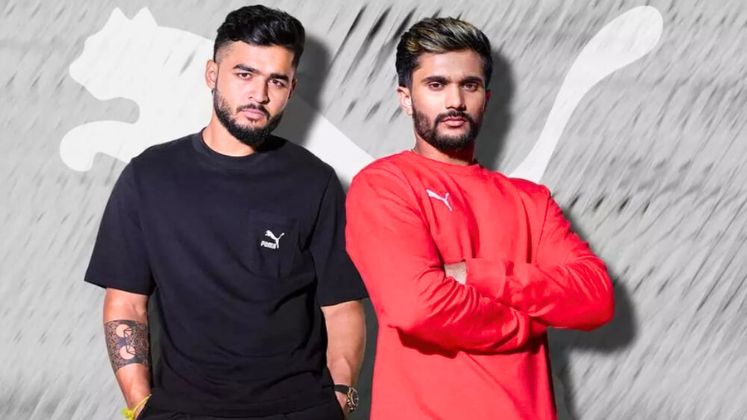
Riyan Parag and Nitish Kumar Reddy joined PUMA as brand ambassadors in February 2026. Both are in India's national cricket setup. Parag's IPL profile with Rajasthan Royals gives him national visibility on cricket's biggest domestic stage — exactly the platform PUMA used with Kohli in the early years of that partnership. Nitish Kumar Reddy's Test debut performance in Australia in the 2024-25 series made him one of the breakthrough cricketers of that tour, the kind of moment PUMA can build a long-term narrative around. BW Retail World confirmed both signings in February, noting PUMA's explicit strategy of identifying the next generation of Indian athletes before they become household names.
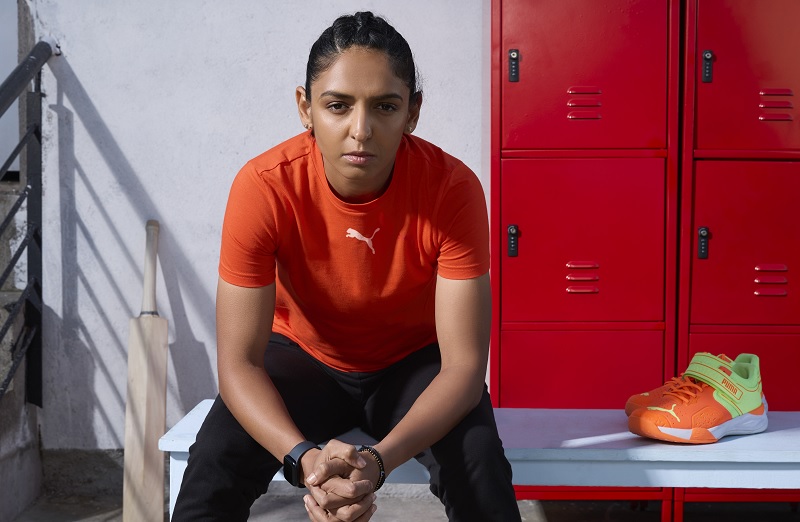
Harmanpreet Kaur represents PUMA India's belated but meaningful commitment to women's cricket — a market that India's sportswear brands have historically underinvested in relative to the actual audience size. India's T20 women's captain has enormous reach with a demographic that PUMA's male-cricket-heavy identity had not addressed directly. It's a positioning move as much as an ambassador signing.
Why the Multi-Ambassador Strategy Makes Structural Sense
The superstar ambassador model has specific vulnerabilities. Form slumps become brand problems. Retirement announcements require new strategies overnight. The ambassador's personal news cycle — injury, controversy, contract negotiation — becomes the brand's news cycle. Kohli's Test retirement in May 2025 would have complicated PUMA India's cricket positioning considerably if the Rs 300 crore renewal had been signed. Instead, PUMA had already transitioned.
A multi-ambassador model spreads exposure across multiple audiences and multiple news cycles. Riyan Parag having a strong IPL season benefits PUMA's cricket line in April-May. Harmanpreet Kaur winning a T20 series benefits it in October. Ibrahim Ali Khan Pataudi running a Palermo sneaker campaign benefits it among Gen Z streetwear consumers year-round. No single ambassador's news cycle dominates the brand narrative.
The financial logic is also straightforward. One Rs 300 crore contract funds many relationships. PUMA India can sign six ambassadors at a fraction of the Kohli renewal cost, maintain fresher campaign energy, and reduce the existential dependency the single-superstar model creates. The 2024 gully cricket video's 50-million-view performance was phenomenal — but it was also the final major creative output of an 8-year partnership that had run its course. That's a high bar for any single successor to clear. Six ambassadors don't need to clear it individually.
Which PUMA Shoes to Actually Buy in India Right Now
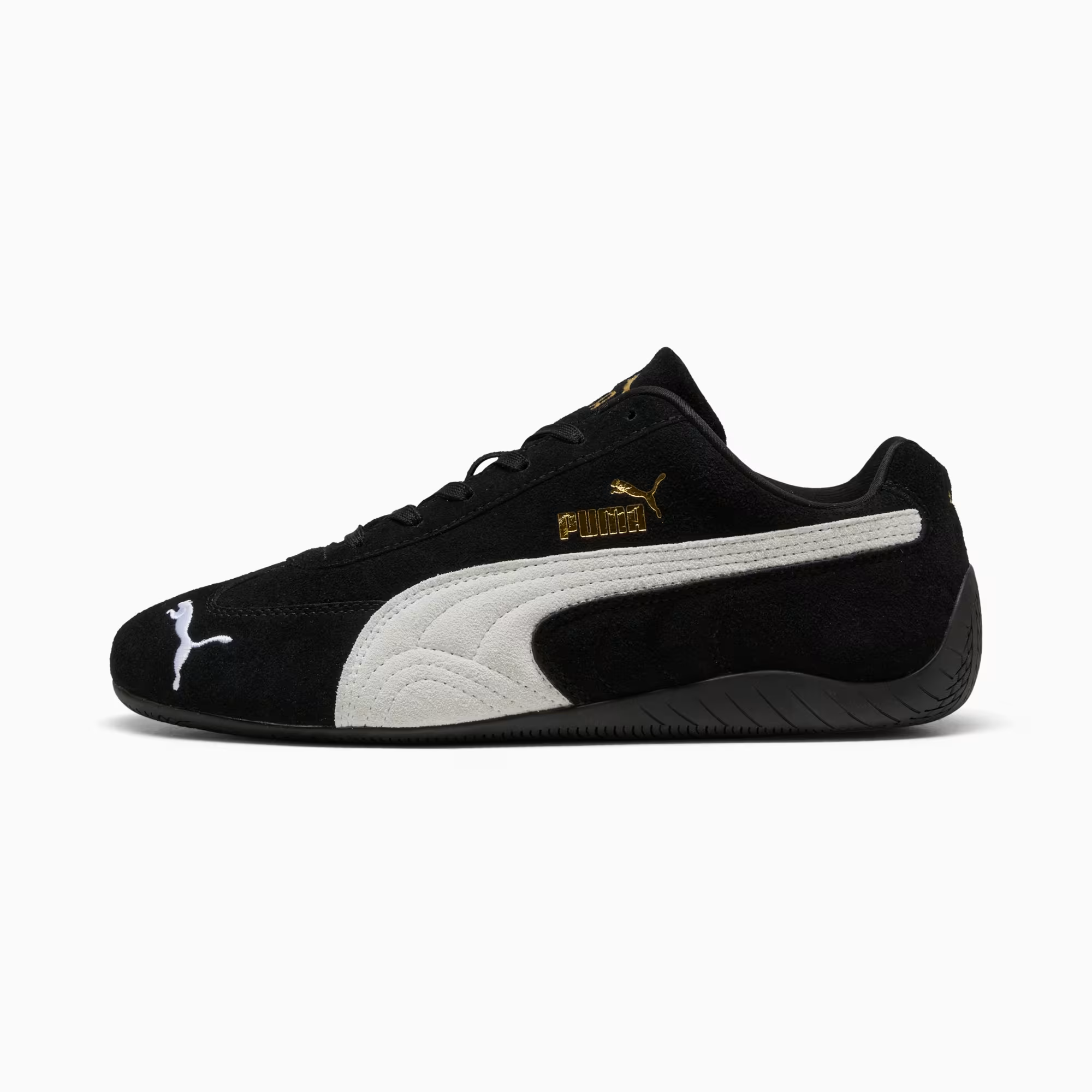
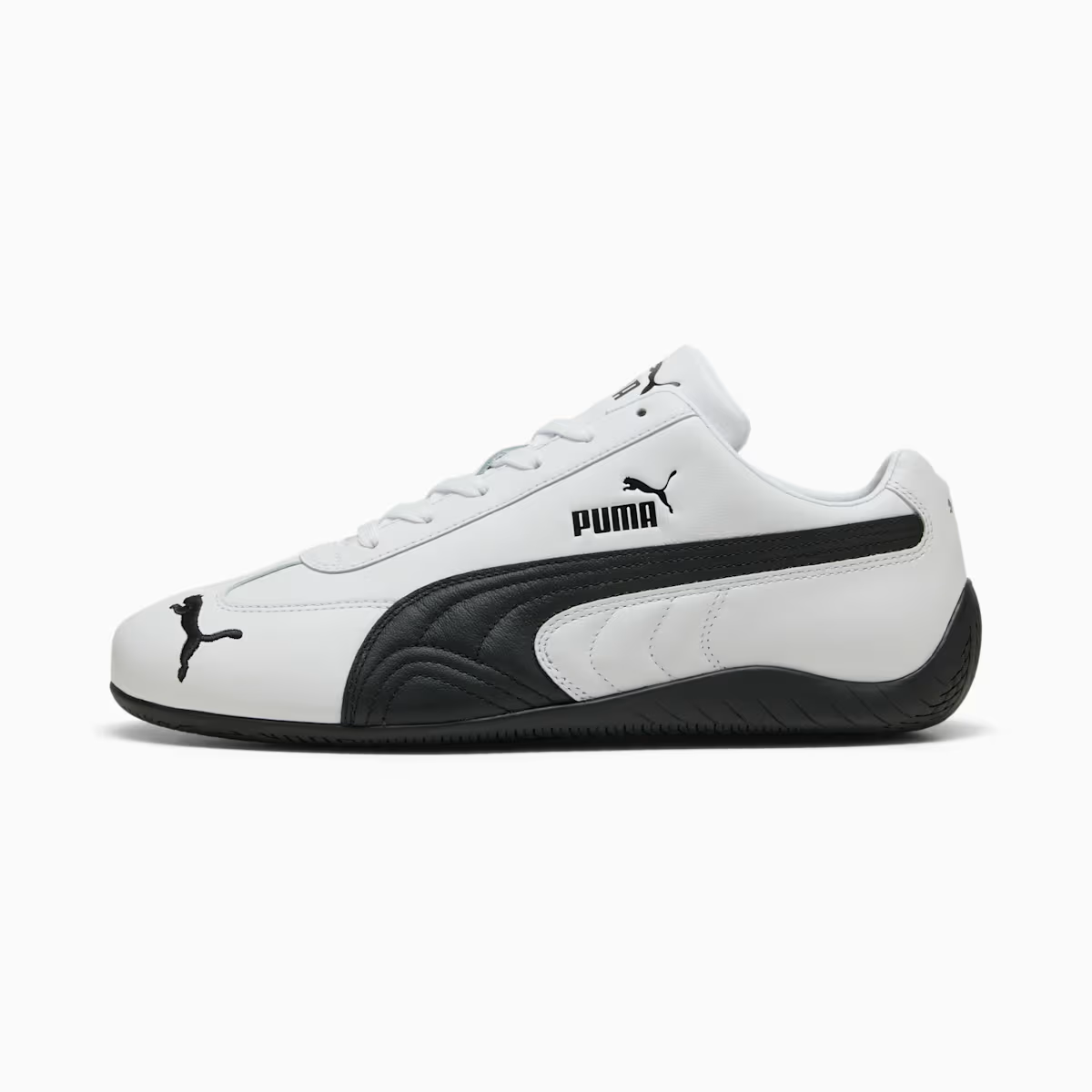
PUMA India's retail presence is deep — Myntra, Ajio, the PUMA app, and brand-owned stores across major cities. The Palermo, now carried by Ibrahim Ali Khan Pataudi in campaign, is the style pick: clean tennis silhouette, Rs 6,999-7,999, pairs with almost anything from straight-leg denim to track pants. It's arguably the most versatile mid-price sneaker PUMA makes for Indian consumers right now.
For performance: the Nitro running shoe family at Rs 8,999-12,999 is PUMA's most technically advanced runner in the Indian market and genuinely competes with Nike React-spec shoes at this price point. Light, responsive, holds up on Indian road surfaces. Not the most visible shoe in PUMA's catalogue but one of the best decisions at the price.
For the streetwear collector: the Mostro series — which A$AP Rocky carries globally — has an interesting distorted-outsole aesthetic that the experimental Bangalore and Mumbai buyer is starting to notice. Prices around Rs 9,999-12,999 depending on colourway. Niche, but that niche is growing.

Can PUMA Replace Kohli? The Honest Answer
They're not trying to. Replacing Virat Kohli with a single ambassador would always be a comparison exercise that no candidate could win — and PUMA knows it. The next-gen strategy is explicitly a bet that distributed cultural presence across multiple rising athletes is more durable than single-superstar dependency in the long run.
Whether Riyan Parag and Nitish Kumar Reddy develop into national icons on the scale Kohli became is unknowable right now. Cricket career trajectories are unpredictable. What PUMA India has done is hedge intelligently: multiple ambassadors, multiple audiences, multiple creative possibilities. The brand's foundation — built over 22 years by Abhishek Ganguly, who now runs Agilitas and One8 — is the institutional knowledge the new team is working from. The next chapter of PUMA India will be written by people who learned from that foundation. Whether they write it as well remains to be seen.
For the full story of where Abhishek Ganguly went and what he's building with Kohli, read our Agilitas equity deal breakdown. For the head-to-head comparison of One8 and HRX — India's two biggest celebrity sportswear brands — that's here. The New Balance selection at SNKRS CART is where international brand credibility and India-facing sneaker culture overlap right now.