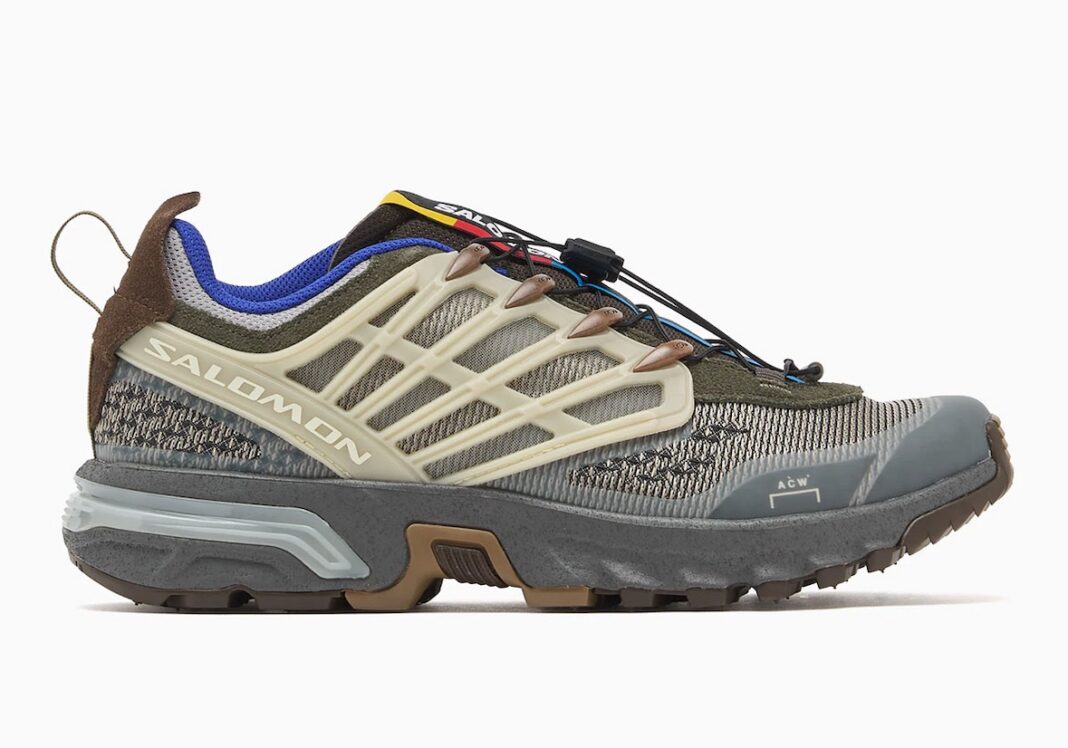

Delhi sneakerheads do not go hiking. Most people wearing Salomon XT-6s in Hauz Khas or Khan Market have never set foot on a mountain trail. That's not a criticism — it's the whole point. The XT-6's move from Himalayan terrain to South Delhi streets tells you more about where sneaker culture is heading in India than almost any Jordan colourway drop this year.
Salomon search volume on Indian fashion platforms grew 35% in 2026, according to data tracked by Hustle Culture India. The leading colourways searched? Vanilla and Black XT-6 — the quieter options, not the neon ones. Delhi and Gurgaon are driving this, with Mumbai following closely. It's a different adoption pattern from how New Balance took off here (Bangalore tech crowds first) or how Adidas Samba spread (younger, pan-metro). The Salomon buyer in India is slightly older, more fashion-aware, and often already familiar with the brand from actual outdoor use.
The XT-6 Backstory: A Trail Shoe That Fashion Couldn't Leave Alone
Salomon launched the XT-6 as a competition trail running shoe in the early 2000s — aggressive lug sole, protective overlays, a Sensifit foot-hugging cage that pulls the upper tight when the lace cinches. On actual trails it's extraordinary. On the streets of Gurgaon or Bandra, it looks extraordinary. That duality created the opening.
Street culture noticed over several years of accumulating co-signs. Supreme x Salomon happened. Then Arc'teryx x Salomon brought it into premium outdoor-fashion territory. Then MM6 Maison Margiela dropped their Spring 2026 Salomon collaboration — the XT-MM6 at $480 and the Cross Dust at $495, per Sneaker Bar Detroit's detailed look at the collection. Three luxury co-signs in three years is how a brand's cultural validation stack gets built. The Salomon XT-6 did not arrive as a fashion shoe. It was dragged there by people who knew what they were doing.
Gorpcore is the label for all of this: technical performance gear worn in situations where you will never need the performance. Arc'teryx shells, Patagonia fleeces, Salomon XT-6s at coffee shops. The irony has become the point, and the point is now mainstream.
Why India Has a Different Relationship With This Trend
The rest of the world discovered gorpcore as aesthetic irony. India comes to it with functional history. Salomon has been sold through trekking and outdoor equipment stores in Delhi, Dehradun, and Shimla for years. The Himalayan trekking community — weekend treks to Triund, longer expeditions to Hampta Pass, competitive ultra-trail runners — has known this brand as legitimate gear for a decade. When the same shoe appears in Delhi street style, there's a recognisability that works differently than in, say, Milan.
The Gurgaon finance and tech crowd leading this search trend is adjacent to actual outdoor culture. They trek in the hills, they use Salomon for that, and now they wear it on the weekend in Cyber Hub. That crossover is more organic here than in purely fashion-driven markets. It also means the Salomon XT-6's India moment isn't going to collapse as quickly as pure fashion trends do — there's a practical base underneath the style move.
What to Actually Buy and What It Costs Landed in India
The base Salomon XT-6 runs $185 for standard colourways — Black/Fiery Red, Earth Brown Walnut, Brilliant Olive Dark Navy — and $200 for Gore-Tex variants. On StockX, most colourways trade at or just below retail ($70-160 for standard options), which tells you clearly: this is not a hype shoe. It trades on merit.
For India buyers, Salomon is not on Myntra in significant volume. Your main options are direct import (salomon.com ships internationally — $185 plus shipping plus 28% import duty plus GST lands at approximately ₹25,000-28,000) or grey market through Crepdog Crew and Hypefly where resellers stock XT-6 units post-import. Expect ₹22,000-32,000 depending on colourway and channel.
The MM6 x Salomon XT-MM6 at $480 is a different proposition. You are buying the Margiela nameplate as much as the footwear. The execution is excellent — the MM6 collab features a modified upper construction and Margiela's signature white stitching details — but the base XT-6 gives you 90% of the street presence at under half the price. Buy the standard to wear it. Buy the MM6 if you collect Margiela seriously.
Our Take: This Trend Has Three More Years in India
Gorpcore is not peaking in India — it's just starting. The brand awareness curve here lags the West by 18-24 months, and the community data places the Salomon XT-6 where the New Balance 990 was in India two years ago: known to collectors, increasingly visible on the street, well before peak saturation. That's an interesting window.
There's also a functional argument specific to India. The XT-6's aggressive lug sole handles wet pavements, monsoon footpaths, and the genuinely unpredictable terrain that Indian streets become in June and July. That's an accelerant for adoption that gorpcore in dry European cities doesn't have. If you need one more reason to buy beyond the aesthetics, that's it.
For the broader technical-meets-lifestyle sneaker landscape in India, our New Balance selection on SNKRS CART covers the other major player in this space. And for how another unassuming silhouette became a global street staple through the same kind of slow cultural accumulation, our Adidas Samba history piece is almost exactly the same trajectory the XT-6 is now on.