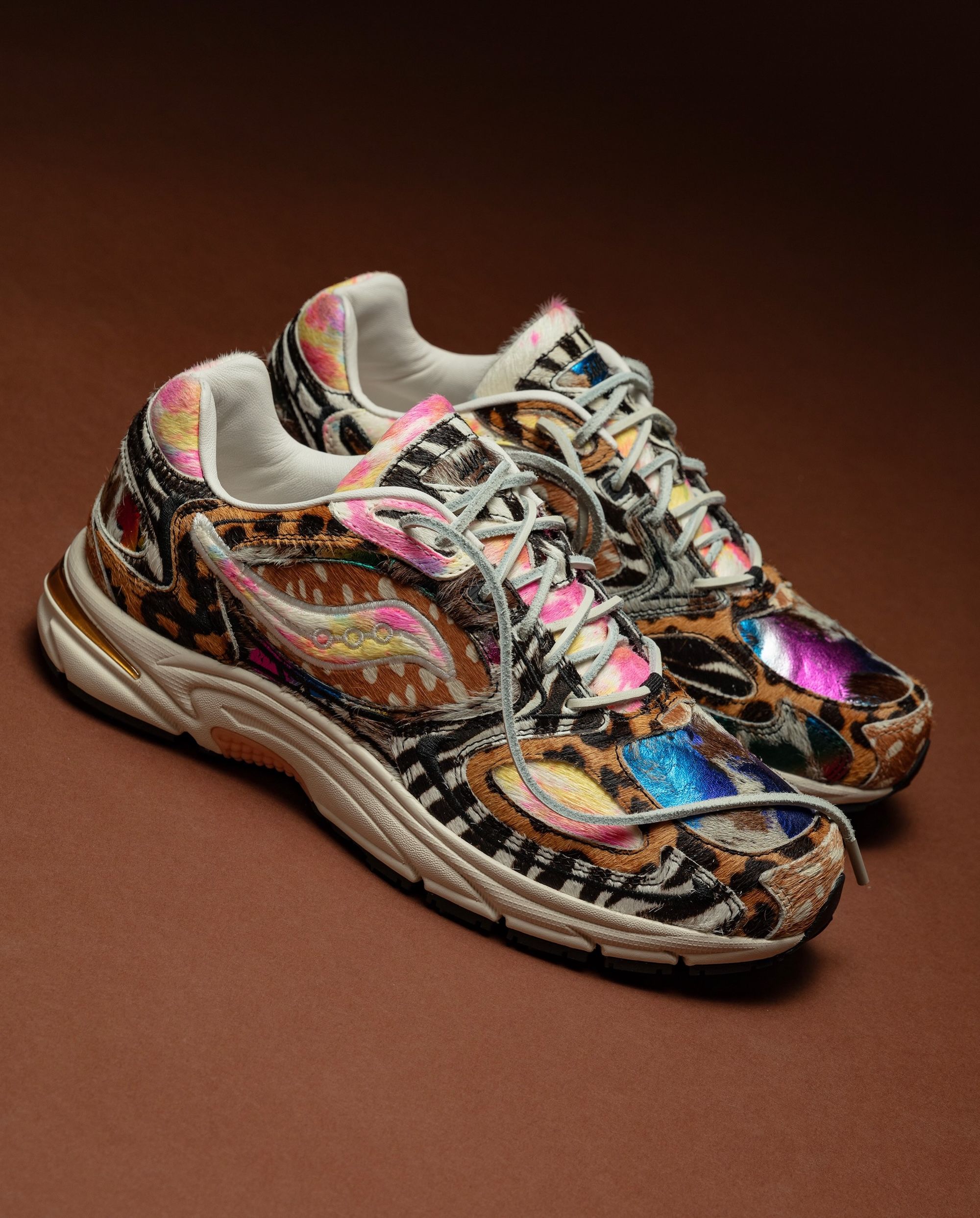
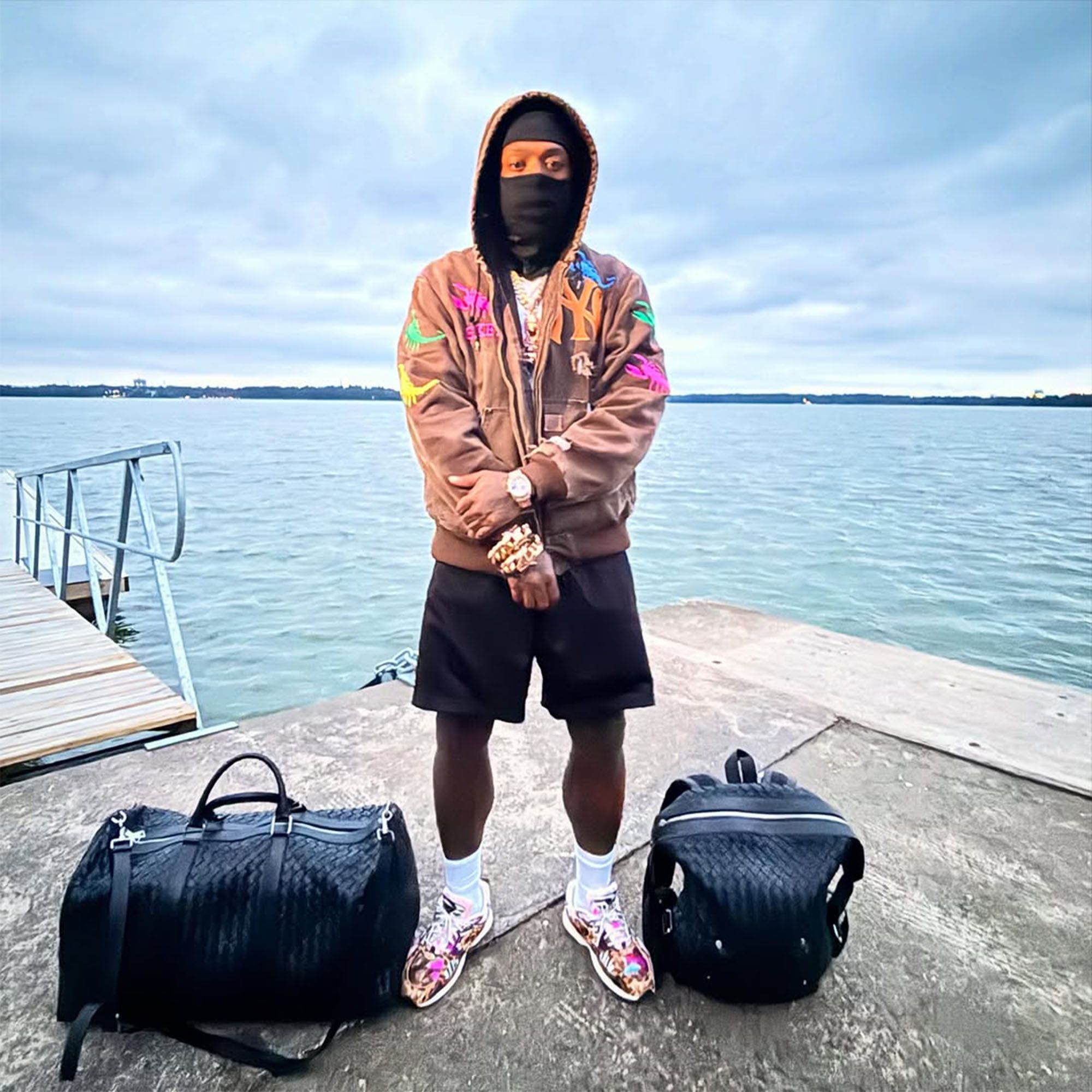
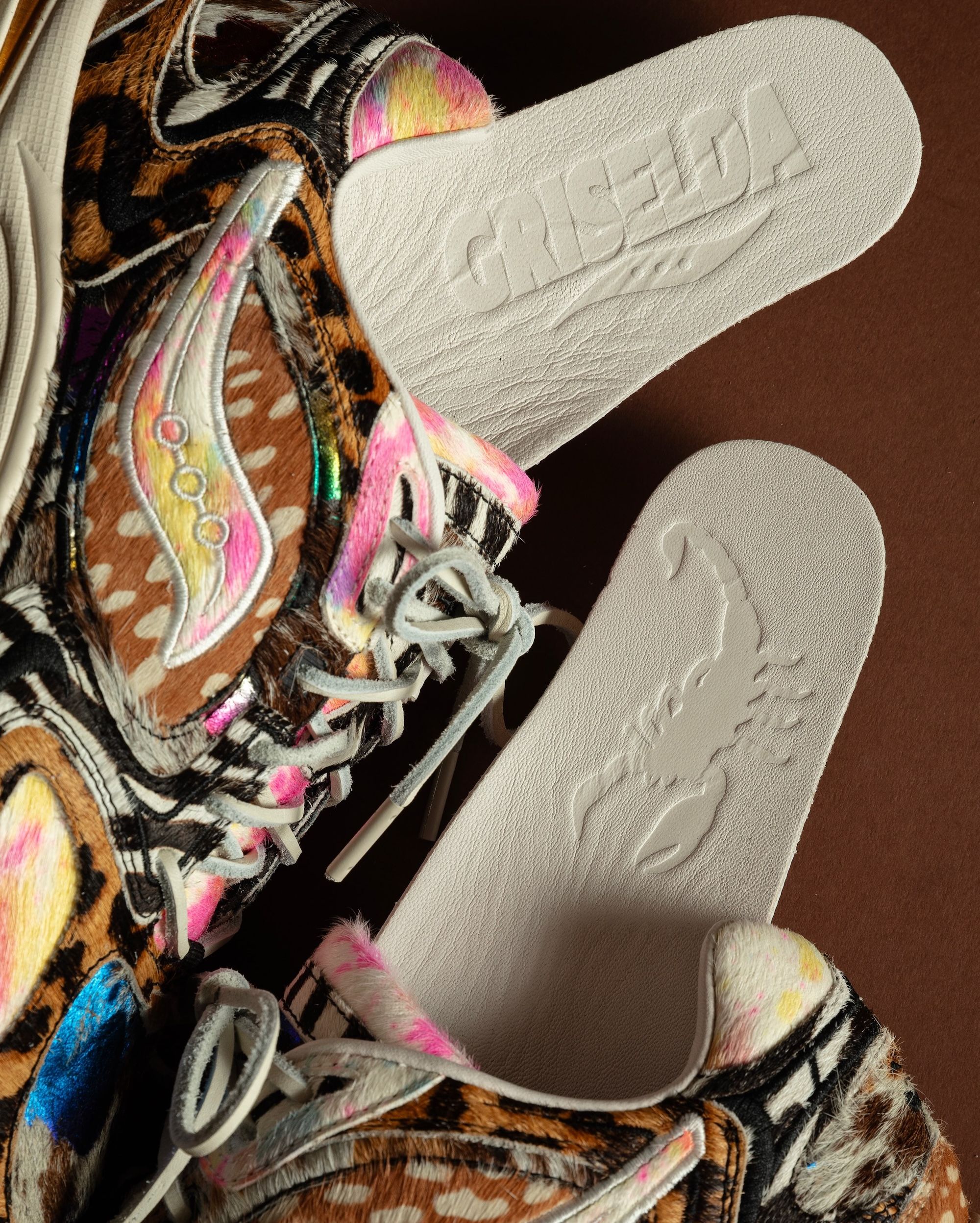
Westside Gunn is refunding anyone who finds two identical pairs of his new shoe. That is not a marketing line, it is a standing promise, because the Saucony Grid Jazz 9 "Awesome Gods" is built from faux animal fur, pony hair, and hand-placed tie-dye splotches that shift pattern and colour placement across the entire production run. Every single pair that ships on August 28, 2026 is, by design, a one-off.
That is a strange thing for a running brand to agree to. Saucony has spent seventy years building a reputation on consistency — same grid outsole, same silhouette, pair after pair, decade after decade. Gunn's entire pitch to the brand was the opposite of that. He wanted chaos, and Saucony let him have it.
From Buffalo to a Luxury Running Shoe
Gunn is a Buffalo native and the co-founder of Griselda Records, the label that turned raw, unpolished East Coast rap into one of the most influential sounds of the last decade. His Saucony partnership goes back to late 2024, and this is not his first release with the brand — a first Grid Jazz colourway landed in December 2025 and moved fast enough that this second drop was inevitable. What's changed is the ambition. Gunn has said openly that he pulled inspiration from Tokyo retailer atmos and designer Jeremy Scott's maximalist streak, and it shows: cow print, leopard spots, deer-hide texture and zebra striping all fight for space across one shoe, with hot pink, blue, purple and orange breaking through wherever there's a gap.
The style code is S71047-5, priced at $225, unisex sizing across the board. Saucony's own EQL raffle opened August 27 at midnight, Gunn's personal storefront blientele.com drops its allocation the morning of the 28th, and Concepts in Boston ran an in-person raffle event a day early. Multiple retailers worldwide are running their own raffles on release day, which is standard practice for a drop this hyped — spreading pairs thin enough that no single line forms.
Splitting the release across three separate channels — Saucony's own site, Gunn's personal storefront, and a boutique raffle — is itself worth noting. It's a distribution model that treats the artist's own retail arm as equally important as the brand's, which is not how most rapper collaborations get structured. Usually the label gets a small allocation and the brand keeps the rest. Here, Gunn's own site is a first-class release channel, not an afterthought.
Why This Matters More Than Another Jordan Collab
Sneaker culture has spent the last five years almost entirely obsessed with basketball retros, and for good reason — that's where the resale money lives. But a rap artist getting genuine design control over a heritage running silhouette, to the point where the brand agrees to ship a shoe where no two units match, is a bigger cultural swing than another Jordan colourway drop. It says something about where Saucony wants to sit culturally: not competing with New Balance on nostalgia alone, but chasing the same credibility Kith brought to New Balance's 2011 with Ronnie Fieg years ago.
The India Angle
Saucony does not have an official retail presence in India, and this collaboration will not appear on any authorised app or store here — which is a bigger gap than most Indian sneakerheads realise, given how much shelf space the brand has clawed back internationally over the past two years. Anyone buying it lands squarely in import territory: at $225 and roughly ₹95.5 to the dollar, the declared value is about ₹21,488. Run that through India's footwear import stack — 35% basic customs duty, a 10% social welfare surcharge on that duty, and 18% IGST on the compounded total — and the landed cost comes out to roughly ₹35,100 before any forwarding or handling fees. That is a serious ask for a shoe most Indian buyers have never physically tried on, from a brand with almost no local sizing reference point.
There is no established resale market to point to yet either — the shoe hasn't shipped, so no StockX or GOAT sale history exists, and the entire "no two pairs match" premise means resale pricing on this one will likely stay chaotic even after it ships, since buyers are effectively paying for a specific pattern combination rather than a standard colourway.
That unpredictability cuts both ways for anyone thinking about buying and reselling. A pair with an especially loud pattern placement — more pink than beige, say — could easily outprice a more muted unit of the exact same release, purely on individual appeal. That's a fundamentally different resale dynamic from a standard GR drop, where every pair in a given size is functionally identical and price discovery is straightforward within days of release.
Our Take
This is the most interesting sneaker collaboration of the month, hands down, and it's not close. Most artist collabs settle for a signature colourway and a co-branded box. Gunn pushed his brand partner into shipping a genuinely unrepeatable product, and that's a much harder thing for a legacy running label to sign off on than it sounds. Making every pair genuinely unique is a bigger creative risk than 99% of collabs take, and Gunn backing it with a personal refund guarantee is the kind of confidence that's rare in this space. Is it worth ₹35,000 landed for Indian buyers, though? Only if you actually care about the story. If you're chasing this purely for resale, skip it — a shoe with no two identical units is nearly impossible to price consistently, which makes it a bad flip regardless of how good the design story is.
If heritage running silhouettes with real design pedigree are more your speed but you'd rather buy something you can actually try on first, our New Balance range covers that same lane without the import headache. And if you want to see how another artist-led running collaboration played out, we covered Kith x New Balance 2011 in detail — a useful comparison for what "credible" looks like in this category.
Sources: Sole Retriever, Just Fresh Kicks.