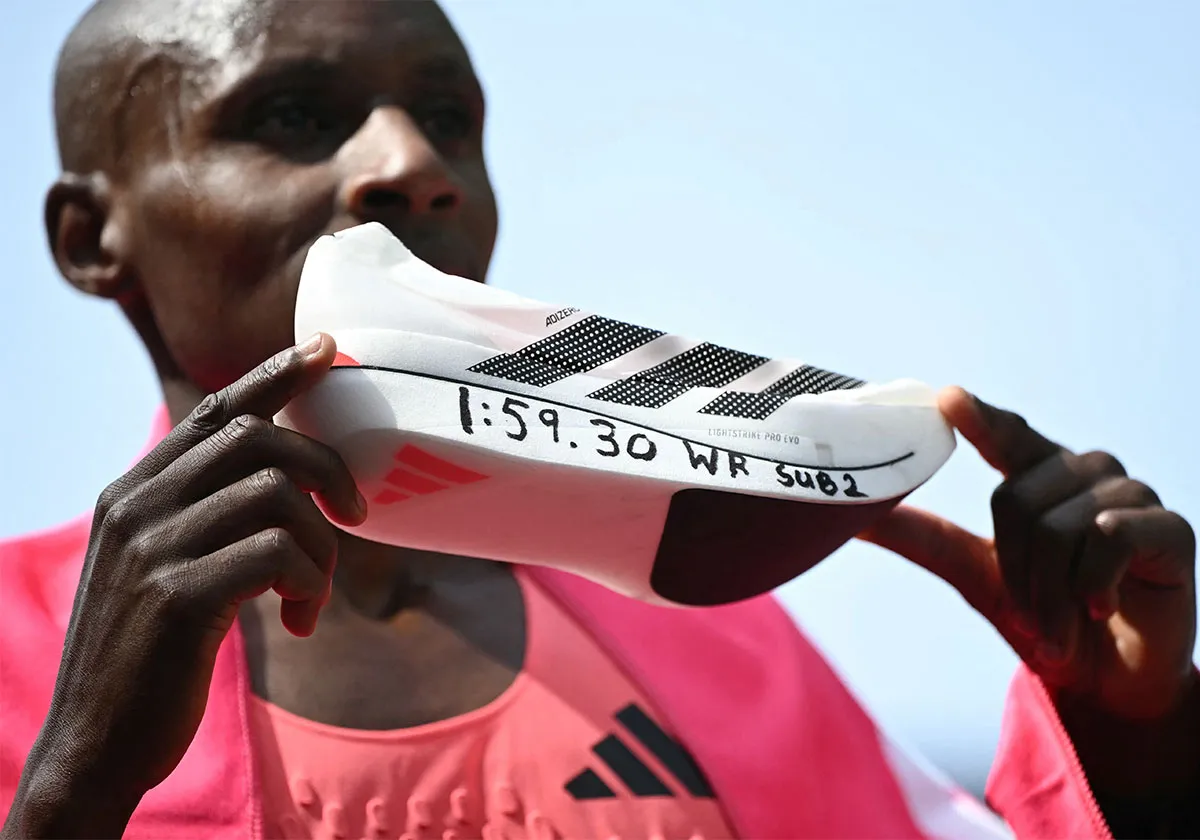
At this April's London Marathon, Sebastian Sawe ran 1:59:30 and became the first person to officially break the two-hour marathon barrier under World Athletics rules. Yomif Kejelcha finished right behind him, also under two hours, in his marathon debut. Tigst Assefa broke the women's-only world record the same day, running 2:15:41. All three wore the same shoe: adidas's $500 Adizero Adios Pro Evo 3, a sneaker that weighs 97 grams and sold out within hours of that race ending.
Within a week, pairs were reselling on StockX for over $3,000. That's not an isolated hype spike — it's the clearest sign yet that the carbon-plated "super shoe" has fully crossed over from elite racing equipment into genuine sneaker culture, resale market and all. If you still think of carbon-plate shoes as a niche category for serious marathoners, the numbers say you're behind.
How Fast This Actually Moved
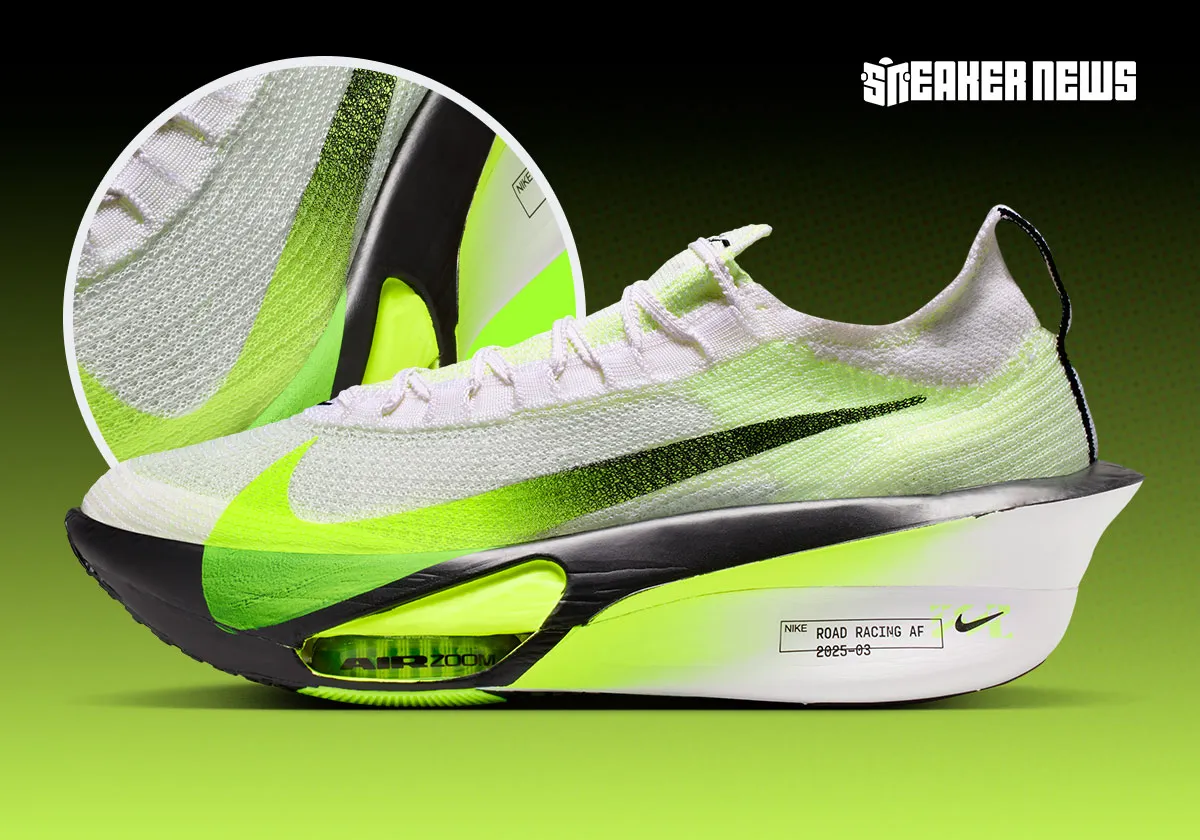
Ten years ago, "super shoes" barely existed as a category. Nike's Vaporfly prototypes first showed up unofficially at the 2016 Rio Olympics, worn by all three marathon medalists before the shoe was even publicly available. By 2019, Eliud Kipchoge ran an unofficial sub-two-hour marathon in Alphafly prototypes, and Nike shoes occupied 31 of 36 podium spots across that year's six major marathons. That's the moment the running world realized carbon plates and super-critical foam weren't a gimmick.
The Pro Evo 3 itself pushed the engineering further than anyone expected: a new Lightstrike Pro Evo foam compound, nearly half the weight of adidas's earlier super-shoe foams, combined with an ENERGYRIM carbon-integrated system built for stability rather than pure stiffness. That combination is what let adidas shave the shoe down to under 100 grams while still improving forefoot energy return by 11 percent over its predecessor — a genuinely different engineering approach from just "add more carbon."
What's changed by 2026 is adoption at street level, not just elite level. As Achilles Heel's data breakdown shows, at this year's Chicago Marathon, 64 percent of all runners wore carbon-plated shoes. New York's marathon saw 62 percent. That's not the top 1 percent chasing Boston qualifiers — that's nearly two-thirds of every pace group, including plenty of four-and-a-half-hour finishers, choosing a $220-to-$500 racing shoe over a standard trainer. The performance case is real: studies show an average 4 percent running economy boost at faster paces, translating to roughly 8 minutes saved across a 4-hour marathon, though the benefit shrinks noticeably for slower paces — closer to 1.6 percent at a 5:00/km pace.
The Money Side Nobody Wearing Regular Trainers Thinks About
Here's the part that should give any buyer pause. A super shoe's midsole foam is tuned for peak responsiveness within a narrow lifespan — most models hold their performance edge for roughly 240 to 400 kilometers before the foam compresses and the benefit fades, compared to 640 to 800 kilometers for a standard trainer. Do the math on cost per kilometer and you're looking at roughly ₹50 to ₹105 per km on a super shoe, against a fraction of that for a durable daily trainer. These were never designed to be your only pair.
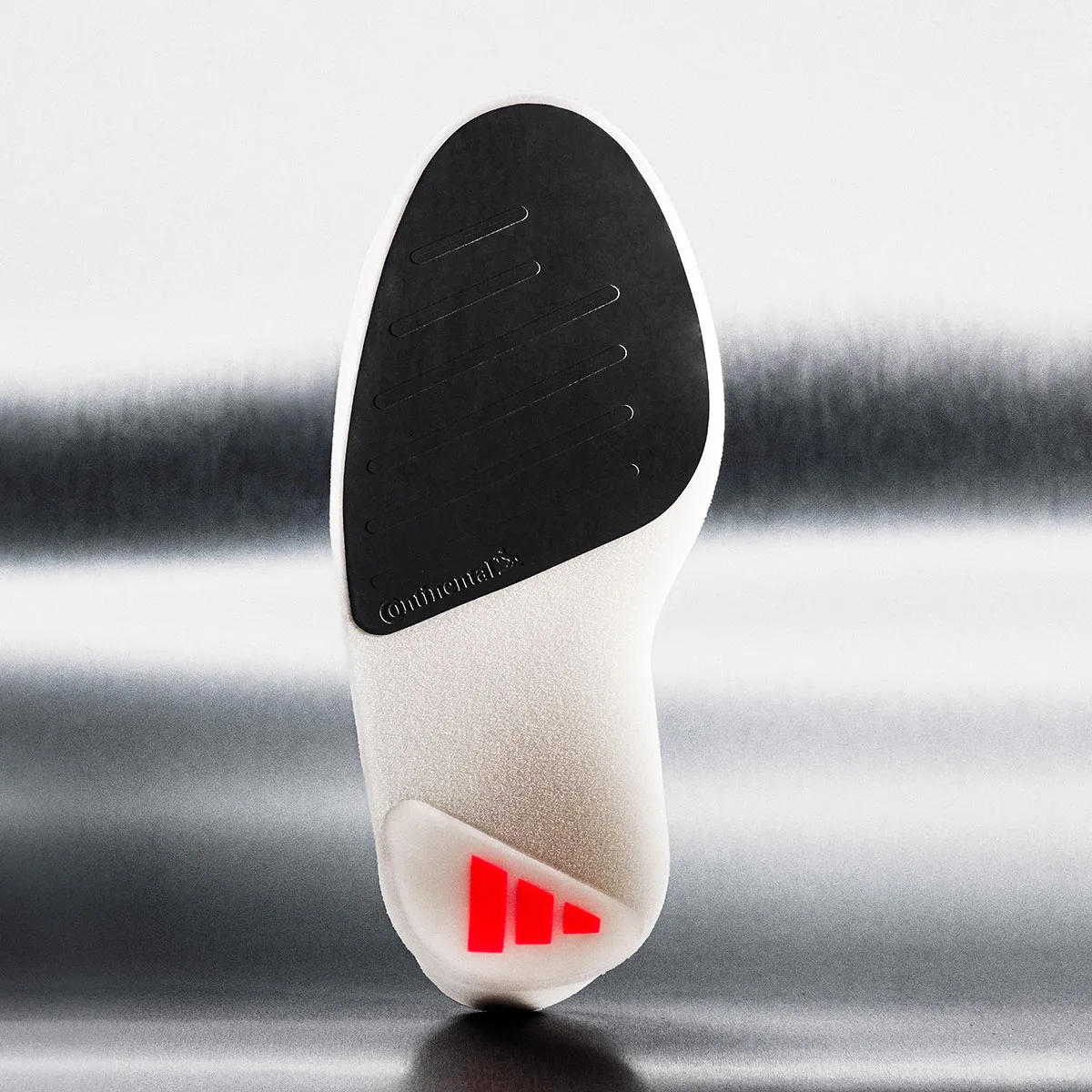
That's exactly why the Pro Evo 3 resale spike is worth watching rather than chasing. On StockX, Sole Retriever's tracking shows the last recorded sale for a men's size 7 pair went for $3,223 — with fees, closer to $3,500 — against a $500 retail price. But the average resale price across all recent sales sits at $1,140, with most pairs actually moving between $1,000 and $1,100. The eye-catching $3,000-plus number is a real sale, but it's an outlier driven by size scarcity, not a realistic price for most buyers. Adidas has reportedly got more stock coming this fall, which should cool the market further.
Where India Actually Fits Into This
India's marathon and half-marathon scene has grown fast enough that carbon-plate shoes are no longer a "buy it abroad" purchase. Nike Alphafly 3 currently runs ₹22,000 to ₹26,000 through Indian retail channels depending on colorway, and the Adidas Adizero Adios Pro (not the ultra-limited Evo 3, the more accessible standard Pro line) sits around ₹18,000 to ₹22,000. Both are genuinely available on Amazon India and through brand storefronts now — but counterfeiting is a real, documented problem specifically on this category, since a fake super shoe looks identical to the real thing until the plate fails mid-run. Buy from an authenticated retailer, not a marketplace listing with no seller history, and if the price looks 30 percent below every other listing you've seen, treat that as a red flag rather than a deal.
Our Take — Buy the Hype Shoe for Race Day, Not for Training
The performance gains are real and well-documented, not marketing fluff — a genuine 4 percent economy improvement at race pace is a meaningful edge for anyone chasing a personal best. If you're running an actual goal marathon or half, a super shoe earns its price tag on race day alone.
But buying one as a daily trainer, or because the Pro Evo 3's marathon-record moment made it look cool, is the wrong call. You'll burn through the foam's performance window in a few months of regular running and be left with an expensive shoe that performs like a mediocre one. Keep a durable daily trainer in rotation and save the super shoe for the days it's actually built for — that's not a compromise, that's how the category was designed to be used.
If you're building out a proper running rotation rather than chasing a single hype pair, our New Balance running range is a solid place to start for the daily-trainer half of that equation. And if brand comparison is more your speed than shoe technology, our On Running vs Hoka breakdown covers the other side of the performance-running conversation happening in India right now.